A journey into the extraordinary world of social insectsiaggio nello straordinario mondo degli insetti sociali
We have seen them working ceaselessly throughout the spring and summer, flying from flower to flower to gather nectar and pollen; we have observed them, admired them, and at times even feared them. Now, well into autumn, they can still be spotted on the final blooms that precede the arrival of the cold season, collecting the last reserves they need to survive the winter.
Bees (Apis mellifera) have always been a part of human life; over time, humans have learned to keep them in hives and make use of the products of their labour: honey, beeswax, pollen, royal jelly, and propolis.
They are the silent guardians of nature and biodiversity—by carrying pollen from one flower to another, they enable the reproduction of more than 80% of the world’s wild plants and agricultural crops, an ecosystem service that is fundamental to our own lives and to the balance of the entire planet.
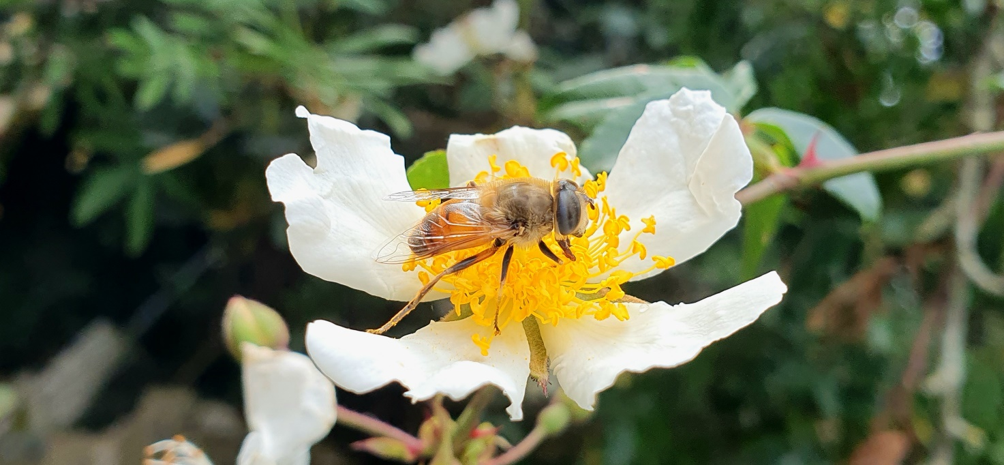
These are social insects belonging to the order Hymenoptera, which have developed an extraordinarily organized society known as a hive, where each individual—responding to precise biological dynamics—performs a specific role to ensure the colony’s survival.
In his work “The Life of the Bee” (La Vie des Abeilles), published in 1901, Maurice Maeterlinck describes the hive as a single, vast organism guided by the “spirit of the hive.”
Within it, the life of the community—which can number as many as 50,000 individuals during the summer—functions as a superorganism with a rigid social structure divided into three main castes.
The Queen Bee is the progenitor and the only fertile female in the entire colony, from whom all other members originate. Her sole task is laying eggs—as many as 2,000 to 3,000 per day. She is constantly tended to by worker bees and fed exclusively on royal jelly, a diet that allows her to live for up to five years.
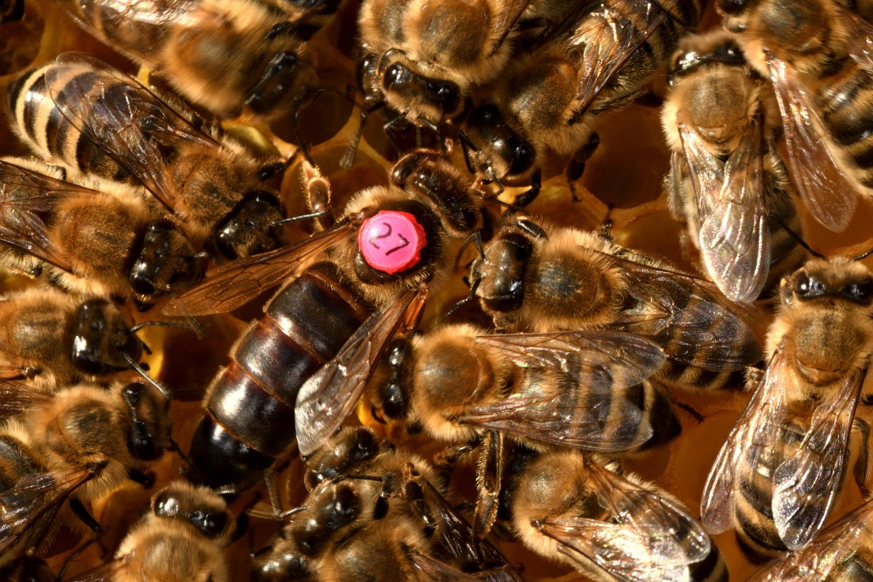
Worker bees make up the vast majority of the hive’s population and are all sterile females. They are entrusted with the complete management of the colony—from maintenance and defense to the gathering of resources. Their lifespan varies depending on the season and the intensity of their labour: during the summer, they live for about 30–45 days, eventually dying from the exhaustion of constant work, whereas in winter, they can live for 4–6 months.
Drones are the male members of the colony, hatched from unfertilized eggs. Larger than the workers, they have stout bodies and prominent eyes. They lack both a stinger and the physical structures necessary for collecting nectar; their sole biological function is to fertilize the queen during the nuptial flight, after which they die.
The Life Cycle of Bees
The life of every bee goes through four fundamental stages.
From an egg laid by the queen at the bottom of a dedicated hexagonal cell in the honeycomb, a small, white, worm-like larva emerges after three days. During its first few days, it is fed royal jelly—a superfood secreted by the hypopharyngeal and mandibular glands of worker bees—and subsequently a mixture of pollen and honey. A larva destined to become a future queen continues to be fed exclusively on royal jelly.
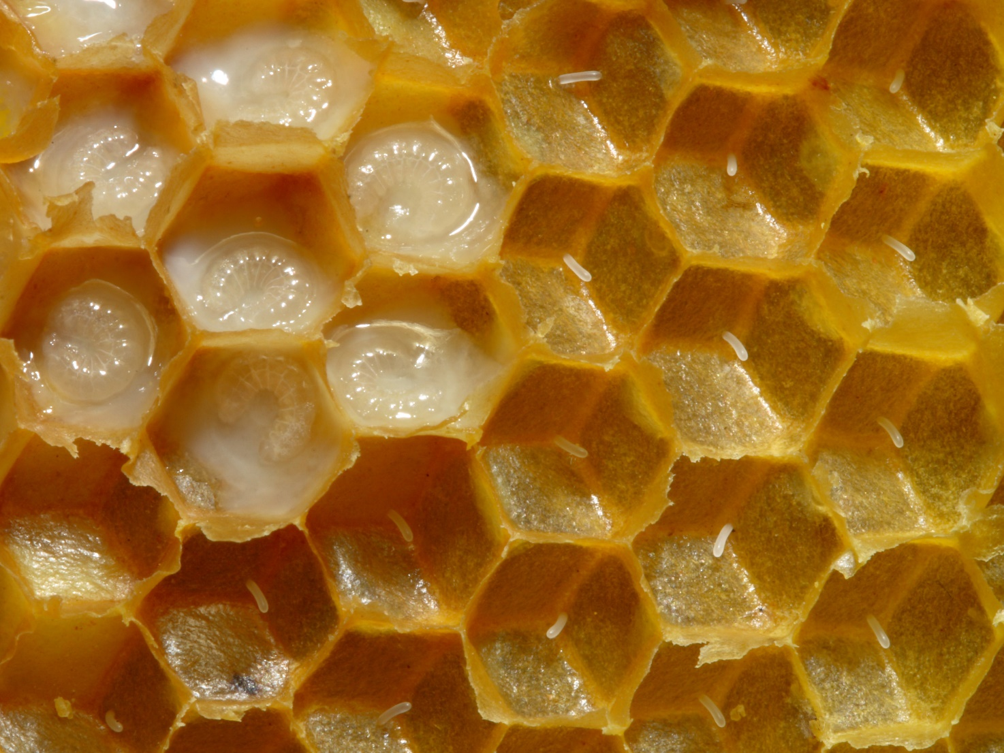
Afterwards, the cell is sealed by worker bees with a wax cap—a process known as operculation. Inside the sealed cell, the larva transforms into a pupa until its metamorphosis is complete. Once development is finished, the now-adult bee breaks through the wax seal and emerges from the cell, ready to begin its tasks.
This cycle varies depending on the bee’s role within the hive: it takes 16 days for a queen, 21 days for a worker bee, and 24 days for a drone.
Life cycle of worker bees
All the work inside the hive weighs on worker bees, whose life cycle represents one of the most fascinating models of social and biological organization in the animal kingdom. With an average life expectancy of around six weeks, the worker does not independently choose her tasks within the colony. Its fate is instead regulated by temporal polyethism, a mechanism in which the transition between different roles is determined by chronological aging and, above all, by the anatomical-physiological changes induced by the sequential activation of specific glandular structures.
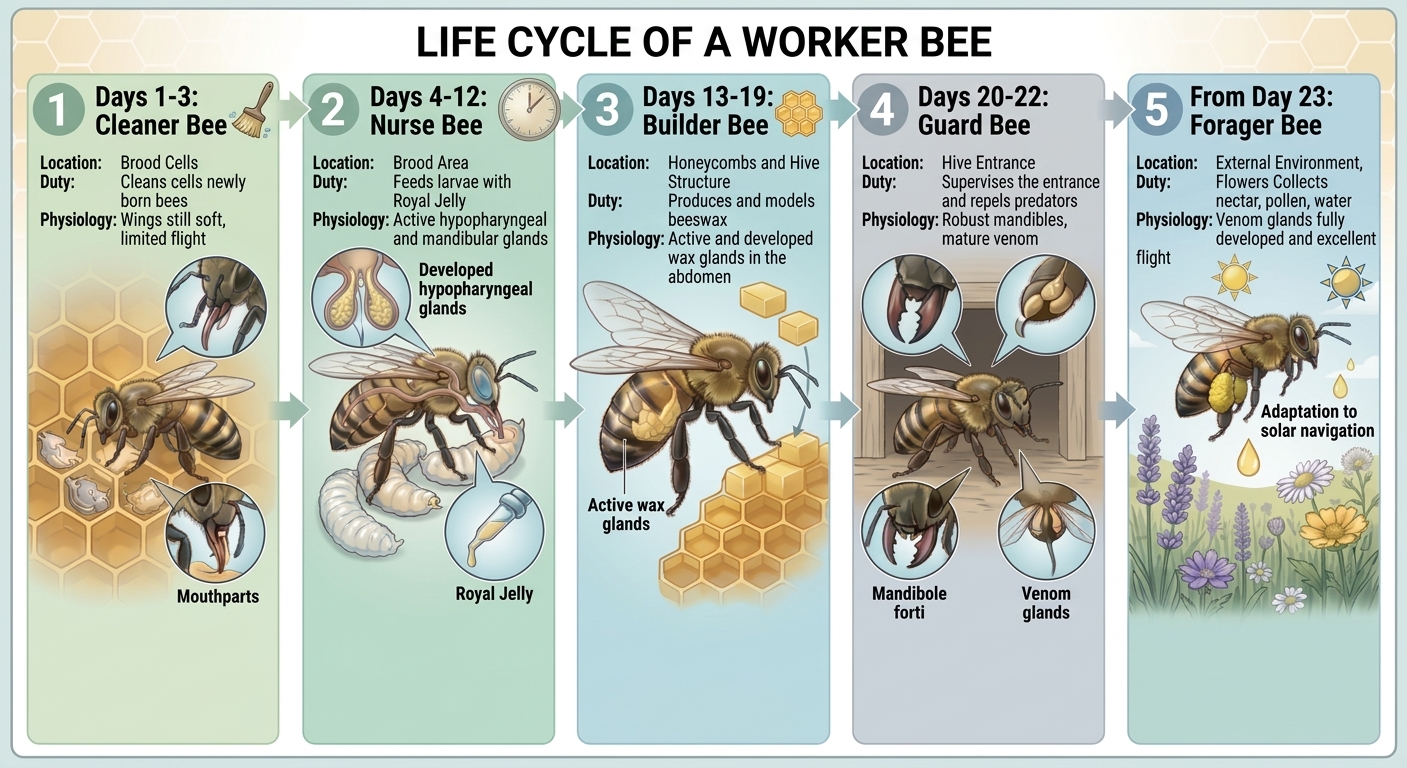
During the first three days of its adult life, a honey bee focuses on cleaning and sanitizing the brood cells. By the fourth day, its hypopharyngeal glands reach full development and begin to secrete royal jelly. The bee then takes on the role of a nurse, spending the next nine days feeding the larvae individually.
After about a week, the insect undergoes a further internal metamorphosis: its venom glands reach full maturity. The bee moves to the outer perimeter of the hive and takes on the role of a guard. For three days, it stands watch at the entrance—distinguishing its hive-mates from intruders and predators through the chemical recognition of their cuticular profiles—ready to defend the hive.Around the thirteenth day, the hypopharyngeal glands regress, while the wax glands—located in the abdominal segments—become active. At this stage, the bee takes on the role of a builder; it exudes wax scales secreted by these glands and shapes them using its mouthparts to construct the characteristic geometric structures of the honeycombs or to repair structural damage within the hive.
At twenty-one days of adult life, she leaves the hive, performs orientation flights to note the position of the sun, creates a cognitive map of the surrounding space, and becomes a forager. By now, her hind legs have adapted to collect pollen, featuring specialized structures called “corbiculae” that function like baskets.During the last two or three weeks of its life, it will fly tirelessly, making ten to twelve trips a day—each covering a range of three to five kilometers—and accumulating a total distance of about eight hundred kilometers. This intense activity continues until the insect dies, worn out by the exhaustion of its wings and musculature.
Communication
Thousands of individuals live within a beehive, cooperating efficiently as a single, perfect superorganism—but how is this possible? To optimize the collection of resources and protect the colony, Apis mellifera has developed a sophisticated communication system, characterized by an intricate network of information exchange that integrates geometric vectors, chemical signals, and sensory interactions.
One of these—the best-known—is the “dance language“, which was discovered and interpreted by the ethologist Karl von Frisch.When a foraging bee discovers a field of flowers—even one located kilometers away—it returns to the hive and performs a precise, repetitive dance. In effect, it employs a geometric language, communicating to the other bees the exact direction to take in relation to the sun’s position, the distance to be covered, and the quality of the food source. Two types of dances have been observed:
- If the resources are located within a radius of 25–50 meters, the bee moves in tight circles on the vertical surface of the honeycomb, constantly alternating between clockwise and counter-clockwise directions (known as a “round dance“). This behavior conveys quantitative information, though it does not specify directional vectors.
- The “waggle dance” is used for greater distances; the bee traces an imaginary figure-eight, featuring a central straight line along which it moves while vigorously wagging its abdomen. In this way, it communicates both the direction to follow—by maintaining a precise angle relative to the sun during flight—and the distance to be travelled.
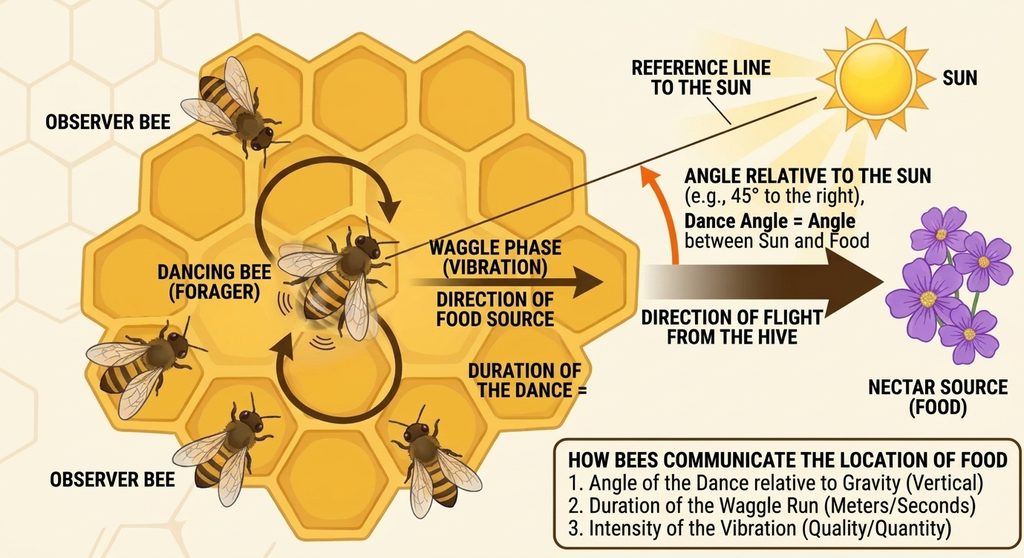
The more intense the abdominal vibration, the further away the food source; the direction is indicated by the angle at which the bee moves in a straight line relative to the vertical—determined by gravity—within the darkness of the hive, which corresponds to the angle of the food source in relation to the position of the Sun outside.
The more energetically the bee dances and repeats the cycle, the more abundant and high-quality the nectar or pollen is.
All socio-political communication within a beehive takes place via pheromones—chemical substances capable of triggering immediate behavioural and physiological responses. The queen, for instance, governs the colony through a mandibular pheromone that spreads via physical contact; this signal regulates the colony’s internal life, organizes work shifts, stabilizes group cohesion, and inhibits the development of ovaries in worker bees, thereby ensuring the queen’s reproductive monopoly. In the event of danger, however, specialized glands located near the stingers of worker bees release alarm pheromones, which prompt the guard bees to coordinate an immediate defense against a predator.
Inside the beehive, there is no light—in fact, it is pitch black. Since sight is of little use, bees rely on a multisensory experience based on direct contact to communicate:
As a scout bee performs its dance, its companions gather around it. Using their antennae, they detect both the micro-vibrations of the honeycomb and the minute shifts in the air caused by the rapid beating of the scout’s wings. (Mechano-acoustic perception)
Through trophallaxis—the mouth-to-mouth exchange of regurgitated nectar among colony members—a chemical language is established, consisting of the sharing of enzymes, pheromones, and chemical traces from the flowers or food sources visited. Bees not only assess the quality of a resource based on its sweetness, but they also memorize the specific scent of the flower, allowing them to recognize it unerringly once in flight. The sharing of these odors and olfactory signals creates a collective olfactory memory, which synchronizes the colony’s activities and directs foragers toward the richest sources of nectar.
We have spoken of the beehive as a community, but it is also a physical structure—a palace where our buzzing Queen and the entire colony reside—an extraordinary example of architectural perfection, in which every millimeter is designed for the survival of the community.
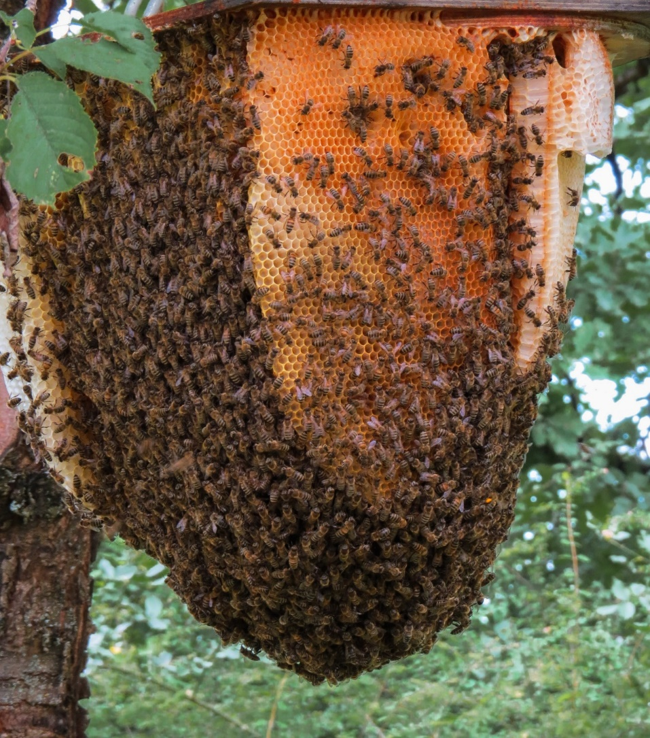
The supporting structure consists of honeycombs—vertical panels of wax that worker bees produce directly from their own bodies. These panels form a dense mosaic of hexagonal cells. The choice of the hexagon is no accident; it represents the perfect geometry for maximizing space, using as little wax as possible, and ensuring exceptional stability.
Inside the beehive, the organization of space is extremely rigid and follows a very precise logic. At the center lies the brood—the nursery where eggs and larvae develop at controlled temperatures. Surrounding this, arranged like a crown, are the pollen reserves, positioned there to efficiently nourish both the larvae and the nurse bees, thanks to their high protein content. In the uppermost section, honey is stored—a precious energy reserve that ensures the colony’s survival throughout the winter.
The beehive is a living system capable of self-regulation and self-defense. To maintain ideal temperature and humidity levels, bees beat their wings frantically, creating a form of forced ventilation; to protect themselves against disease, they use propolis—a plant resin transformed into a powerful natural disinfectant—which serves to seal cracks, isolate pathogens, and keep the entire environment sterile.
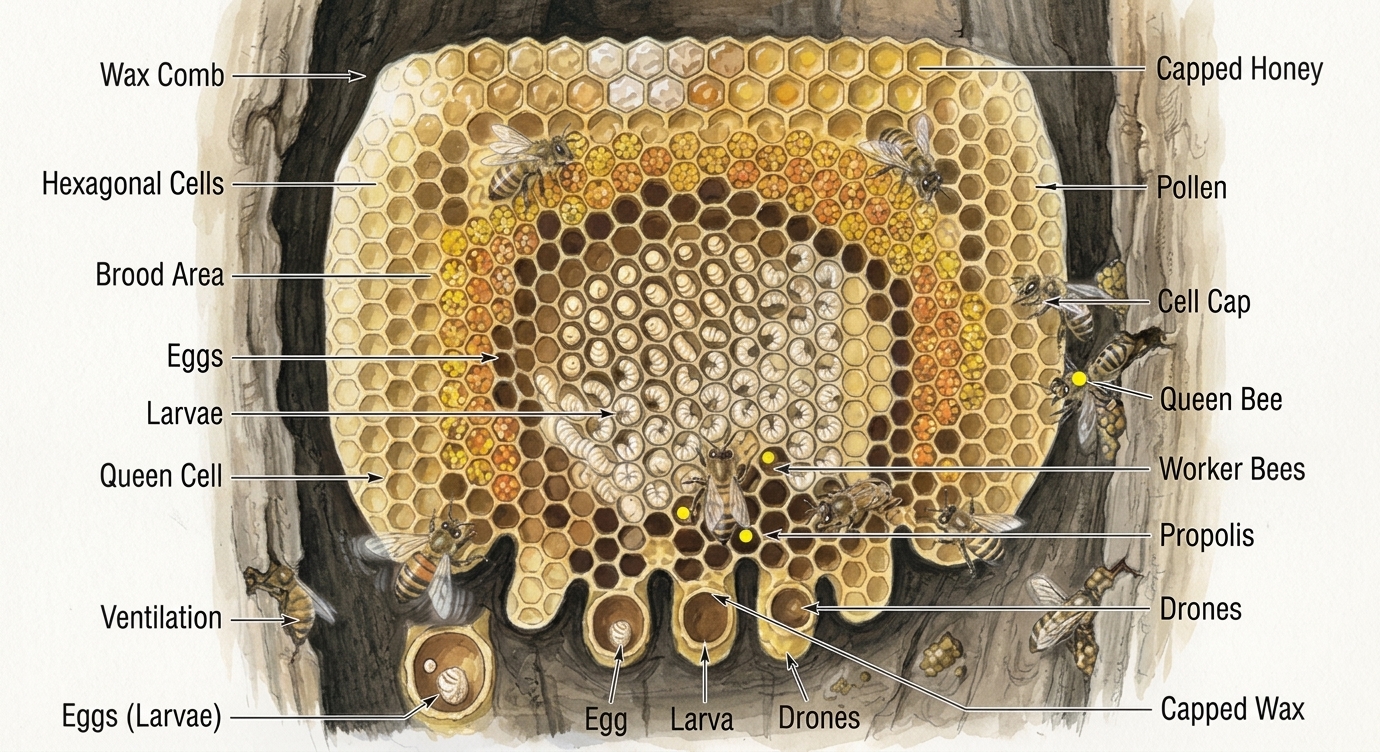
The entire beehive is built from wax, but how do bees produce it?
As previously mentioned, between the twelfth and eighteenth day of their adult lives, worker bees enter a wax-producing phase. During this period, four pairs of glands located on the underside of the abdomen secrete liquid wax; upon contact with the air, this wax instantly solidifies into microscopic, translucent scales, produced in batches of eight at a time. The bees then use their hind legs to transfer these scales to their mandibles, where they are chewed. This mechanical action, combined with salivary enzymes, renders the material pliable and easy to shape. Finally, this wax is used to construct the honeycomb—a structure of hexagonal cells that houses the entire colony, serves as a storage space for honey and pollen, and provides a place for the brood to develop.
However, the cells do not start out hexagonal; a 2013 study published in the Journal of The Royal Society Interface by Bhushan L. Karihaloo and his colleagues demonstrated that the final hexagonal shape is not the result of intentional planning by the insect, but rather the outcome of a physical process.
In reality, bees shape simple circles by working the wax at approximately 40 degrees Celsius, when it is still a viscous liquid. Once these cylinders are placed side by side, physics takes over: surface tension and mutual pressure deform and compress the rounded walls, causing them to fit together perfectly. As the wax subsequently cools and solidifies, it locks the structure into its final hexagonal form.
At this point, one might ask: How is honey produced?
Honey is the result of extensive teamwork within the hive, achieved through a continuous and coordinated process. Forager bees collect nectar from flowers using their ligula—a sort of hairy, flexible proboscis—and store it in their honey sac (also known as a honey stomach), a specialized organ used to transport the nectar back to the hive.
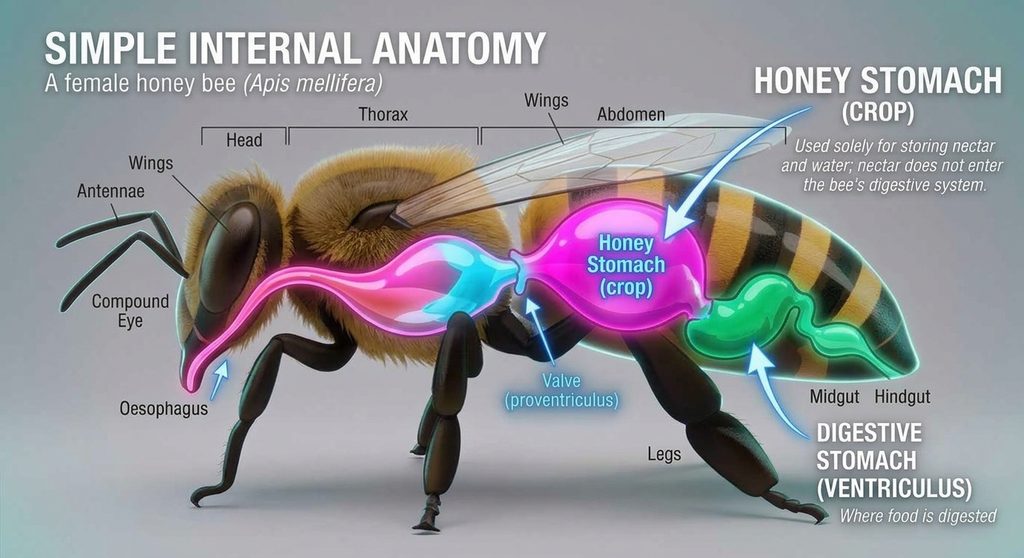
Upon arrival, the foraging bee regurgitates the liquid, passing it to a worker bee at the entrance, which adds the initial enzymes. The actual processing begins here: the worker bees pass the nectar from one to another, enriching it with further enzymes essential for breaking down complex sugars into simple sugars. The mixture is then deposited into the honeycomb cells for dehydration; the bees constantly fan the air with their wings to evaporate excess water and thicken the substance. Once the honey reaches the proper consistency, the bees “cap” it, sealing the cell with a thin layer of wax. This meticulous process transforms nectar into finished honey—a product that is, for all practical purposes, eternal.
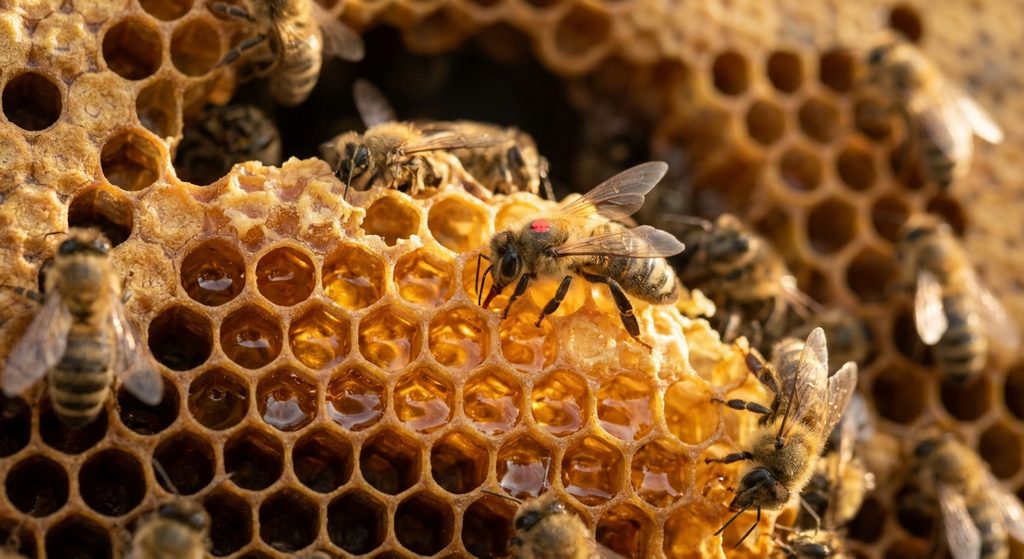
Winter is coming—what happens inside the beehive?
Bees do not hibernate; to survive the winter, they employ an extraordinary collective heating strategy known as a “cluster“—a compact sphere formed by the bees huddling closely together.
At the center is the queen, protected and safe. The colder it gets outside, the tighter the cluster becomes to retain heat. The bees in the outermost layer act as an insulating shield, while those inside generate heat. To avoid freezing, the bees constantly swap places, moving from the outside to the inside of the cluster.
To warm up, they contract their chest muscles without moving their wings; this effort is made possible by the energy from the sugars in the honey they consume, which is converted into pure heat. The honey stored during the summer is, in fact, their only source of energy.
It is the radical changes that take place within the hive that ensure survival during the winter; in autumn, the queen stops laying eggs, and any remaining drones are driven out of the hive by the worker bees—left to die so that they do not consume precious food stores. Furthermore, winter bees are longer-lived: those born in the autumn possess special bodily reserves of fat and protein, which allow them to survive for several months rather than just a few weeks.
Even during the winter, the beehive is kept very clean; the bees never soil it, and on warmer, sunnier winter days—when conditions allow—they break up their cluster and take short flights outside to empty their bowels and clean themselves.
We always have something to learn from these little creatures!
To explore certain aspects in greater detail, we recommend reading the following articles:
N.Emilio Baldaccini “Karl von Frisch, the man who understood the language of bees”
Chiara Sanmartin “Honey: a precious gift from bees”. Features, properties and problems“
Anna Lacci “Communication, the basis of insect societies”
Maria Beatrice Lupi “The City of Ants – A journey into the extraordinary world of social insects“
Credits
Maria Beatrice Lupi is a naturalist and an expert in training, sustainable development planning, participatory methodologies, and European planning. She is currently engaged in dissemination and education for sustainability.
Translated by Maria Antonietta Sessa