A journey into the extraordinary world of social insects
Ants!
They have made their way inside; a long, orderly line has invaded my kitchen and is marching purposefully toward the pantry, drawn by a packet of cookies and a jar of honey—intent on stealing them bit by bit. It is a real problem! To drive them away without using insecticide, I remove the objects of their desire and sprinkle some talcum powder on the surfaces to disrupt the scent trail guiding them. I follow their path all the way out to the garden to discover where they came from and locate their nest. There it is! Small mounds of soil granules, surrounded by dozens of busy ants moving in and out. These are the entrances to the anthill—one of the animal kingdom’s most incredible feats of engineering. No one would believe that creatures often dismissed as tiny, insignificant, and annoying could create a structure and a social microcosm of such complexity.
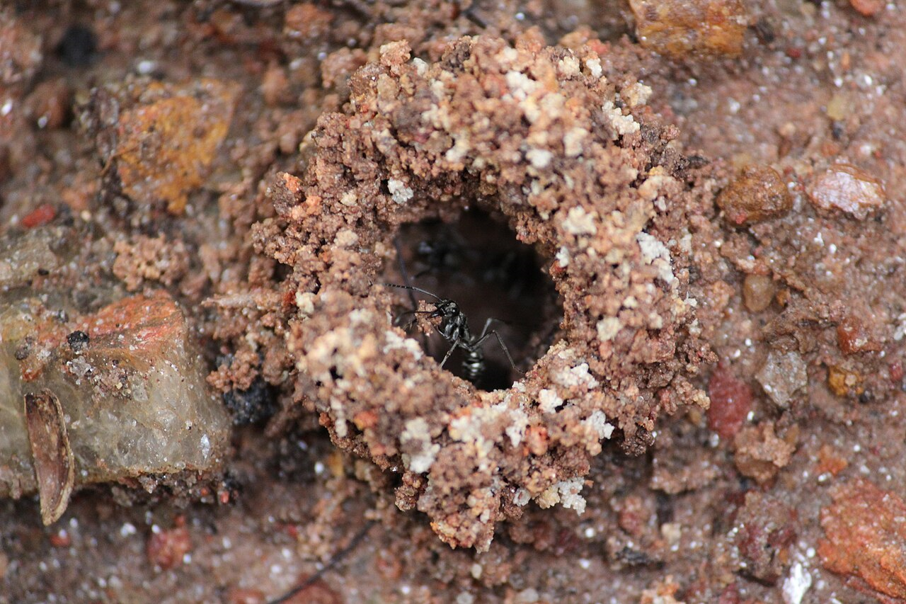
Ants are social Hymenoptera insects that have inhabited Earth for over 150 million years. They are highly adaptable and found everywhere—provided temperature and humidity conditions are favorable—to the point that they are absent only from Antarctica, where it is too cold. It is said that the total weight of all ants on Earth is comparable to the total weight of all human beings. Between 14,000 and 16,000 species have been described, though the actual number is believed to be much higher. Approximately 267 species are found in Italy, 33 of which are considered endemic to the country. Among these, the most common species are:
- The Black garden ant (Lasius niger), the most widespread species in parks and homes; dark in color, it measures up to 5 mm and builds small nests in the soil or beneath floors;
- The Pharaoh ant (Monomorium pharaonis), a very small (1.5–2.5 mm), light-colored species that often infests heated buildings;
- The Carpenter ant (Camponotus spp.), a large ant that excavates galleries in living or dead wood and can damage the wooden structures of buildings;
- The Red wood ant (Formica rufa), which lives in forests; it is large (8–10 mm) and builds large, dome-shaped nests out of pine needles and twigs, defending itself by spraying formic acid.
Ants are extraordinary insects possessing the highest level of social organization in the animal kingdom, based on eusociality. This means that an ant colony functions as a true superorganism, in which individual ants do not act autonomously but operate as a single entity with a structured and efficient division of labour. Everything revolves around the development of a coordinated collective intelligence—or “swarm intelligence“—yet without any central control. In short, no one is in charge, but everyone knows what to do for the good of the community.
The colony is structured into specialized castes, each designed for distinct biological functions:
The Queen serves as the matriarch and founder of the colony. Easily identified as the largest ant within the anthill, she is the sole fertile female responsible for reproduction. Throughout a lifespan that can span up to twenty years, her primary function is egg-laying. By releasing specific chemical signals known as pheromones, she regulates the development and caste determination of the emerging offspring. Annually, she produces winged queens and males to establish new colonies. The entire survival of the community is anchored to the queen; should she perish, the colony ultimately collapses.
The Workers visible foraging around the anthill are sterile, wingless females significantly smaller than the queen, forming the vital core of the colony. They manage daily operations through a highly organized division of labor based on age and immediate needs. Among them, the Nurses attend specifically to the queen, sanitize the eggs, nourish the developing larvae, and tend to the pupae.
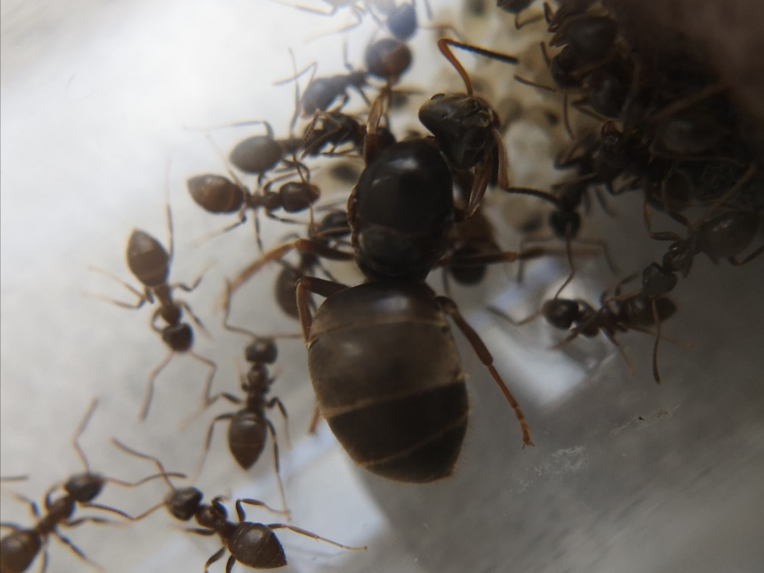
Photo by Jason Berger – Own work, CC BY-SA 4.0
Scouts and foragers are responsible for locating and collecting food supplies. Meanwhile, the cleaners maintain the anthill by clearing away debris, and the builders excavate intricate tunnels and repair the nest structure.
Certain species feature soldier ants—specialized workers dedicated to defending the colony from external threats—which are easily recognized by their oversized heads and powerful mandibles.
Colony labor is not simultaneous; approximately 40% of the population remains inactive at any given time, acting as a vital reserve of energy and manpower prepared to respond to emergencies or sudden workforce declines.
In contrast, males contribute no labor to the anthill. These winged ants have remarkably short lifespans: upon reaching maturity, they participate in the nuptial flight and perish shortly after mating with the future queen, who then departs to establish a new colony.
Ants construct their nests wherever the environment allows; as Maurice Maeterlinck observed in his 1930 work, The Life of Ants, “there are as many types of anthills as there are species of ants.“
If we were to shrink down—much like Alice in Wonderland—and explore an anthill, we would discover a remarkable marvel of engineering. Built entirely without blueprints or a site manager, thousands of ants collaborate through self-organization, harnessing fundamental physical laws to forge a sophisticated subterranean network of tunnels and specialized chambers. The result is a structurally sound, durable, and well-ventilated habitat engineered to safeguard the colony and maintain optimal internal temperatures.
Come viene costruito un formicaio?
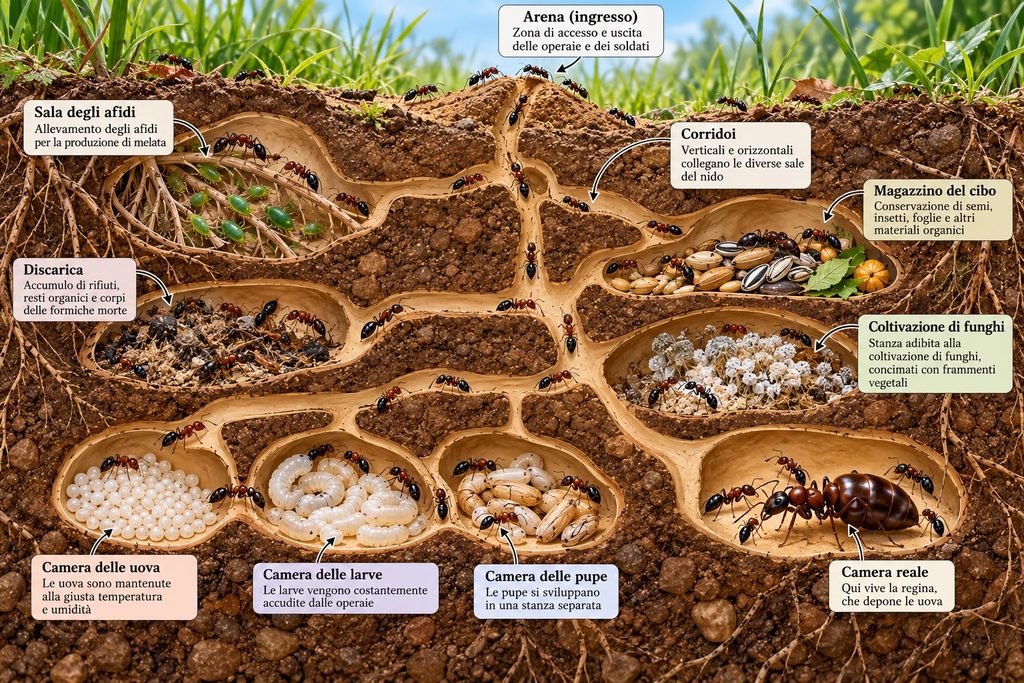
Following the nuptial flight, the newly crowned queen discards her wings—consuming them for sustenance—and digs a foundational chamber to lay her eggs. The first generation of worker ants immediately sets to work building the nest, tirelessly transporting soil between the lower and upper levels. This continuous movement allows damp earth to dry out above ground, effectively preventing mold from spreading inside.
A standard anthill includes an entrance zone, commonly referred to as the “arena,” which serves as a hub for foraging workers and soldiers guarding the access points.
Vertical shafts (functioning as elevators) and horizontal galleries (acting as hallways) link the various sections of the nest, allowing the colony to navigate swiftly. The arrangement of the chambers is meticulously planned based on specific environmental needs, including humidity, temperature, hygiene, and security. The tunnels maintain their structural integrity thanks to a specialized cement-like substance used to reinforce the walls, created by the ants themselves by blending saliva with minerals mined from the surrounding soil.
Tucked away in the deepest, most secure section lies the royal chamber, the dedicated space where the queen resides and continuously lays eggs.
Just beyond this area are the rearing chambers, or nurseries, where workers attentively tend to eggs, larvae, and pupae. Throughout the day, the workers relocate the brood between rooms to guarantee they experience the ideal temperature and humidity levels required for healthy development.
Several underground spaces function as dedicated storehouses—dry rooms used to stockpile provisions like seeds, dead insects, leaves, and organic debris, or to cultivate fungi fertilized with plant matter. Other chambers accommodate root aphids, allowing the ants to harvest honeydew, a rich source of energy and sugar. The outermost periphery houses refuse dumps, where workers discard waste, organic scraps, and deceased colony members to preserve optimal hygiene and curb the spread of disease.
Optimal airflow is maintained through sophisticated passive ventilation systems that efficiently expel carbon dioxide and metabolic heat generated by millions of ants and decomposing organic matter—a true marvel of biological engineering.
Renowned entomologist Walter R. Tschinkel was the pioneer who detailed the nest architecture of the Florida harvester ant (Pogonomyrmex badius) and successfully cast its intricate structure, as documented in his work Ant Architecture: The Wonder, Beauty, and Science of Underground Nests (2021).
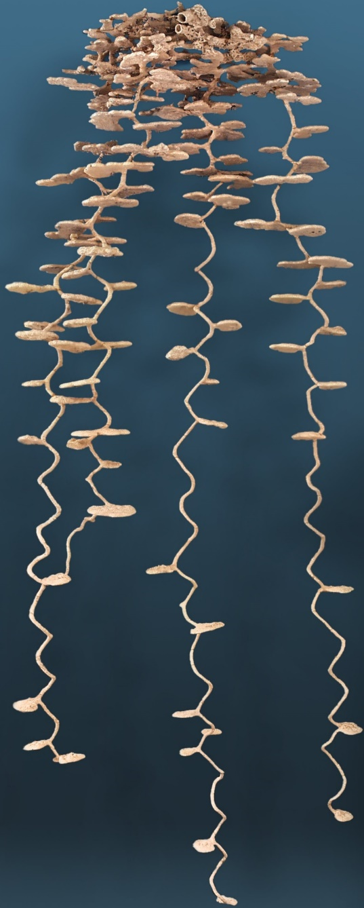
Image by Shaners Becker from Seattle, USA – ant nest excavation, CC BY-SA 2.0
How do ants communicate with one another and successfully navigate the absolute darkness of the underground anthill?
Ants possess extremely poor eyesight, relying almost entirely on chemical communication. Their highly sensitive antennae detect pheromones—specialized scent compounds secreted by glands onto the ground or the bodies of nestmates—allowing them to map trails to food sources, sound the alarm during danger, and differentiate between colony members and rival invaders. Within the pitch-black tunnels of the anthill, they navigate safely by combining these chemical cues with physical contact and vibration perception.
As previously mentioned, antennae are the most important sensory organs for ants; they house sensilla—specialized sensory structures capable of detecting chemical substances and transmitting signals to the brain that trigger specific actions. These antennae can detect chemical molecules in the air or on surfaces; because they operate independently, they allow the ant to determine the direction of a scent based on which antenna detects it first. When two ants meet in the dark tunnels of the nest, they touch antennae (a process known as trophallaxis) to exchange information regarding tasks to be performed or the colony’s needs.
They can also produce low-frequency sounds and vibrations by rubbing their abdomens together, thereby alerting their nestmates to danger.
When a scout discovers a food source, she returns to the nest while depositing droplets of pheromones on the ground. Other ants follow this scent trail, reinforcing it as they go. Once all the food has been gathered, the scent naturally dissipates.
Many species even possess a remarkable “geometric” sense of orientation. After a long, winding journey in search of food, they are able to return to the nest in a straight line by calculating the sun’s angle and counting their own steps.
Fun fact:
Millions of years before humans did, ants “invented” animal husbandry and agriculture. They farm aphids—both inside the nest and outside on plants—tapping their abdomens with their antennae until they secrete droplets of a sugary liquid called honeydew, which the ants love, while also protecting them from the ladybugs that feed on them.
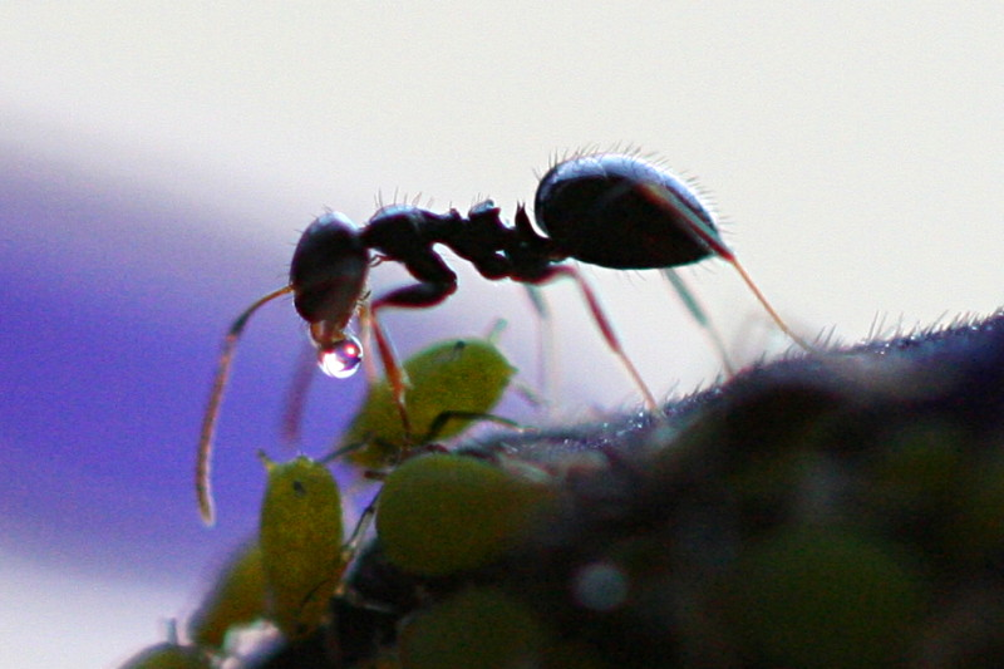
Photo by Dawidi, Johannesburg, South Africa – CC BY 2.5
That’s not all! According to the prestigious Treccani Encyclopedia, certain leaf-cutter ants from Central and South America carry leaf fragments they have cut into specific underground chambers of the nest; there, the leaves are chewed and transformed into a pulp upon which the worker ants ‘sow’ the fungi that will serve as their food. This constitutes a genuine form of farming: if different or invasive fungi appear, they are weeded out.
Some species engage in warfare and ‘slavery’: they invade other ant colonies to seize seed stores or abduct worker larvae. Curiously, there are species consisting solely of soldiers—ants completely incapable of performing worker tasks or even feeding themselves. Large and imposing, they are capable only of waging war, so they must rely on workers from other species, enslaving them to serve their needs.
Ultimately, provided they don’t invade the pantry or nest beneath the floorboards, we can view ants in a different light. After all, if they stay in the garden, they aren’t really such a nuisance; in fact, by turning over the soil and digging their tunnels, they aerate the ground. They are also efficient scavengers, cleaning the garden of organic matter that we would consider waste but they regard as food.
To learn more about communication in social insects, we recommend reading Anna Lacci’s excellent article, “Communication, the Basis of Insect Societies”, at the following link: Communication, the basis of insect societies
Credits
Author: Anna Lacci is a scientific popularizer and expert in environmental education and sustainability and in territory teaching. She is the author of documentaries and naturalistic books, notebooks and interdisciplinary teaching aids, and multimedia information materials.
Translated by Maria Antonietta Sessa