“A bee has 960,000 neurons in its brainstem. With this limited number of neurons, it can perform cognitive feats such as learning to distinguish Monet paintings from Picasso paintings, and then instantly recognize new works by Monet and Picasso that have never been seen before. With its 960,000 neurons, the bee can distinguish different examples of human faces, identifying them even when presented rotated at certain angles. Furthermore, the bee can abstractly categorize stimuli as “same” or “different,” regardless of the nature and characteristics of the stimuli themselves.
Humans certainly don’t look out of place compared to bees or other creatures with miniature nervous systems. We too can recognize faces, classify a painting as a Picasso or a Monet, and distinguish between same and different. However, the human brain has 86 billion neurons: the real mystery is not how it can recognize faces or Monet paintings, but what it does with all those neurons left over.”
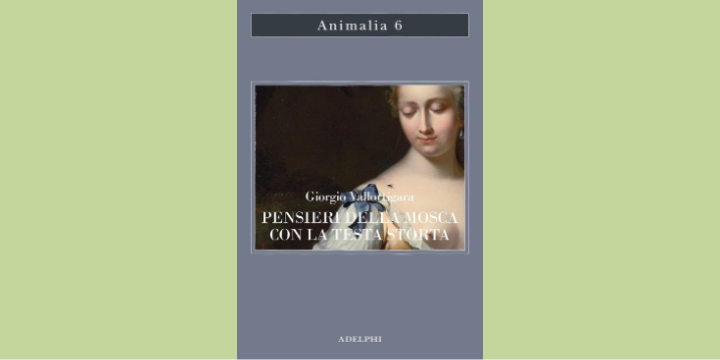
This is the stimulating and ironic text on the back cover of the book “Pensieri della mosca con la testa storta” (Thoughts of the Crooked-Headed Fly). It’s the latest book by neuroscientist Giorgio Vallortigara, who takes us on a journey through the theories and studies investigating consciousness—starting with the tiny brains of bees, flies, horseshoe crabs, and other invertebrates.

Pages: 221, Paperback | EAN: 9788845934964
The numerous questions that arise when attributing “consciousness” to a given species are central to the arguments supported by the analysis of various experiments and their interpretations. This volume attempts to answer questions such as: What do we know about animal consciousness? Do we have scientific evidence that allows us to determine whether an animal is sentient or not?
In an interview with the journal Research4Life, Vallortigara states, “…to investigate consciousness, criteria beyond behavioural and physiological evidence are needed, such as an increase in adrenaline in response to pain. (…) There are several factors considered in the study of consciousness that also relate to the distinction between vertebrates and invertebrates. One factor is the number of neurons as a direct indicator of sentience; however, I am very skeptical of this association. Invertebrates exhibit a vast range of variation, from the 302 neurons in Caenorhabditis elegans (a nematode worm) to animals like the octopus or cuttlefish, which have around fifty million neurons. Additionally, there is ongoing debate about how much the number of neurons can truly indicate the presence of consciousness.”
“Furthermore, these experiments have also been successfully conducted on small artificial neural networks. In general, advances in neuroscience and cognitive psychology show us that only a small portion of our mental life is conscious and aware. In short, the number of neurons does not seem to be related so much to consciousness as, if anything, to the animal’s size, muscles, and body surface area…”, adds Vallortigara.
It’s surprising, then, to discover through this reading how many skills, such as categorization, basic numerical abilities, or the capacity to use tools and plan actions, can be performed with a limited number of neurons. Thus, actions once thought unique to humans have gradually been shown to be shared with many other species.
In short, if you don’t let yourself be intimidated by such a challenging (but fascinating!) topic, you’ll be amazed to feel closer to the animal world you once thought distant and incomprehensible. So let yourself be guided by a pen that explains science and its processes in a pleasant and engaging way, without boring you.
Enjoy your reading!
Credits
Author: Anna Lacci is a science communicator and expert in environmental education, sustainability, and place-based teaching. She is the author of documentaries, nature books, workbooks, interdisciplinary teaching resources, and multimedia informational materials.
Translated by Maria Antonietta Sessa