August is a truly generous month for those who choose to spend their holidays in the mountains: during hikes, they can enjoy snacks of blueberries and raspberries. Blackberries, on the other hand, are easily accessible to everyone: just drive down any country road and you can feast on them. Just be careful not to get stained!
Let’s take a closer look at these wonderful dispensers of sweet experiences.
They all have one thing in common: they are woody perennials with overwintering buds that can reach considerable size.
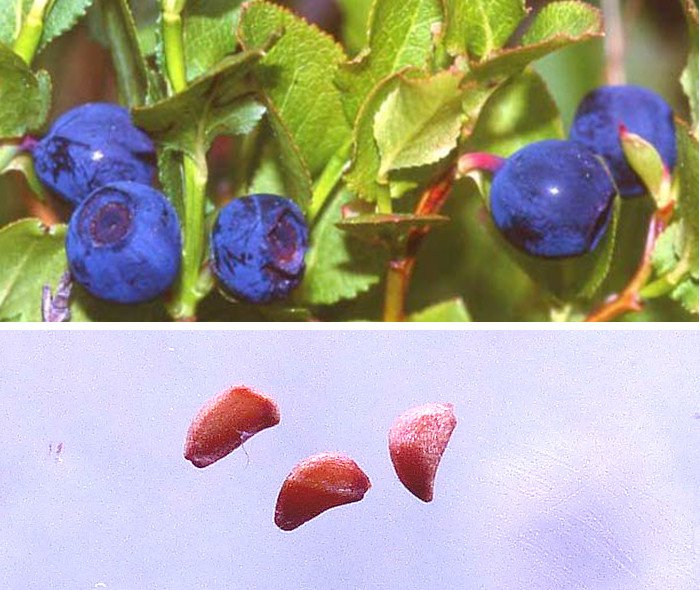
The blueberry (Vaccinium myrtillus) is a heather plant with erect, highly branched stems; the young stems are green, while the older ones are cylindrical and woody at the base. It bears alternate leaves about three centimeters long with thin blades. The small flowers, with greenish-white or pinkish gamosepalous corollas, require pollinating insects to produce fruit. The fruit is a fleshy pseudoberry, 4-8 mm in diameter, subspherical, blue-purple or blackish, pruinose, and slightly flattened at the apex, where it retains a characteristic ring-shaped scar. It contains numerous seeds with a distinctive crescent shape. The flavor, as is well known, is tart and very pleasant. For this reason, blueberries are also cultivated. The harvesting of wild fruits is regulated in various regions and is carried out by authorized pickers who use a “comb,” a small tool equipped with long metal teeth that detach the fruit from the twigs.
Blueberry plants are generally found at altitudes of 1,200 to 2,000 meters in forests (mostly spruce), heathlands, shrublands, and subalpine pastures, always on moist, acid-loving soils. It is a gregarious species that tends to form large populations.
This distinctly Nordic plant was already well-loved by prehistoric humans, as numerous blueberry seeds have been found among the pile-dwelling remains of Trentino.
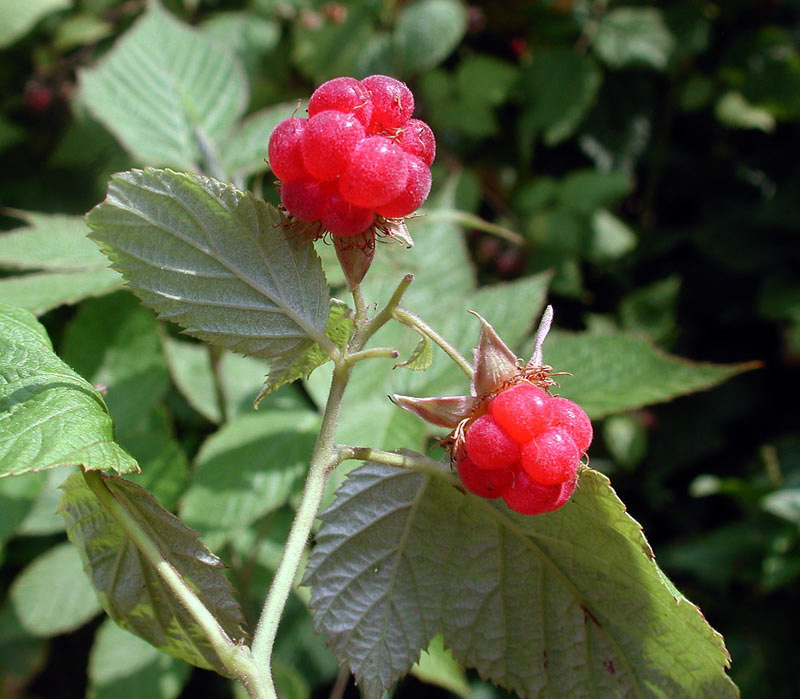
Wild raspberry (Rubus idaeus) and Elmleaf blackberry (Rubus ulmifolius) are both members of the Rosaceae family.
The former is a shrub with creeping rhizomes that produce stems up to 2 meters tall, generally glabrous and herbaceous, which die in the second year after fruiting. The latter is a perennial, evergreen shrub with long, flexible branches that often creep, climb, or trail, with woody roots producing long, drooping suckers with rooting apical buds.
This means the “expansion strategies” of the two species differ: raspberries grow using roots that spread along the ground, while blackberries extend their branches, which root wherever they find space.
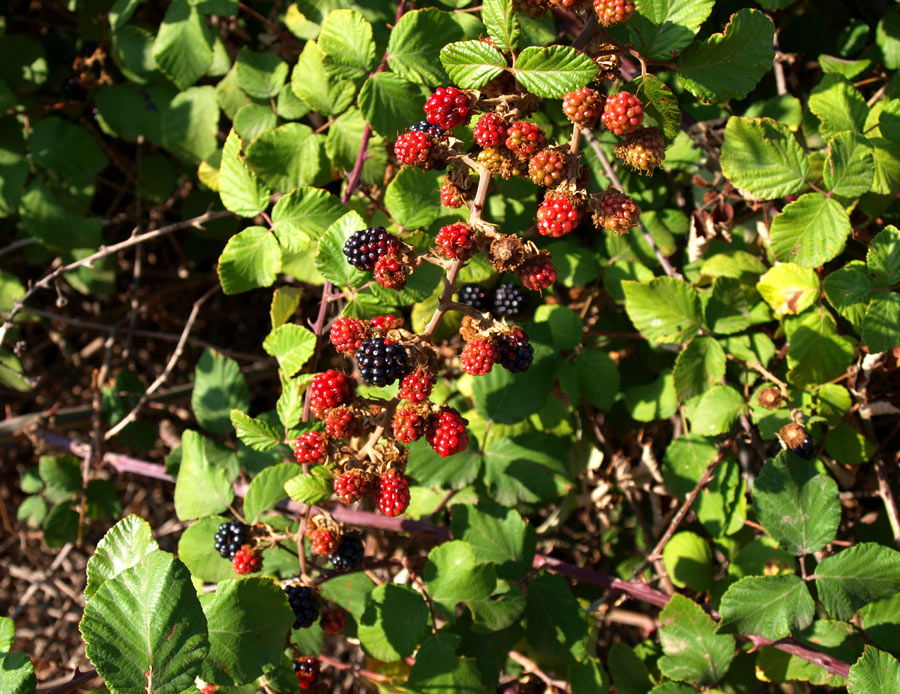
The fruits are similar: both consist of small drupes (drupelets); those of the elmleaf blackberry are smaller and more numerous. Both fruits are initially green; raspberries then turn red, while blackberry fruits first turn red and then black, which is why they are called blackberries!
As I was saying, raspberries are only found above 200 meters in cool, well-drained soil because they tolerate cold well but suffer in hot, dry climates. Blackberries, with their sweet berries, are found everywhere!
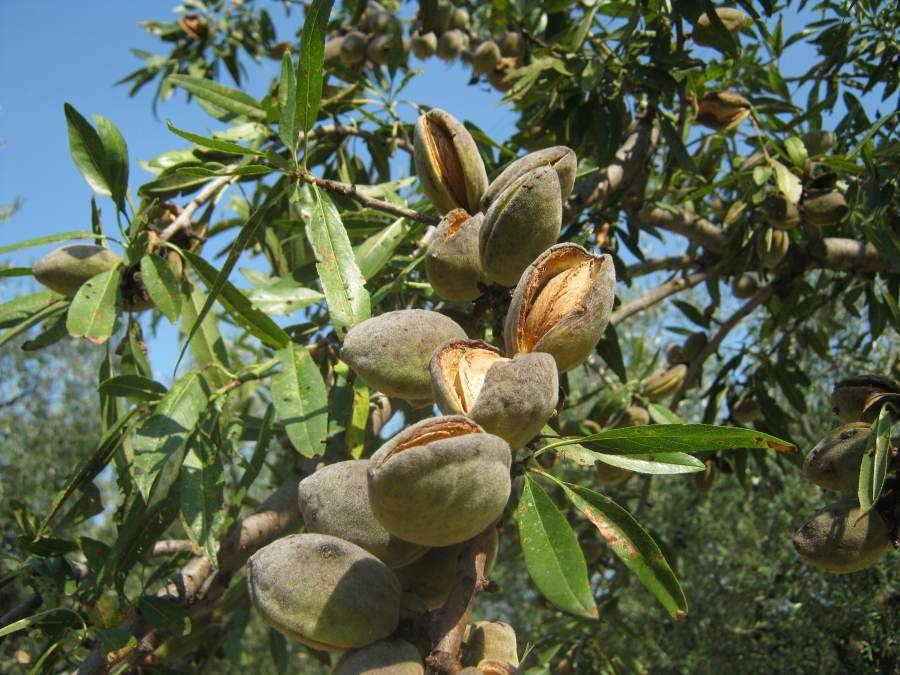
The fruits of the almond tree (Prunus amygdalus) begin to be harvested in August, especially in the southern Mediterranean regions. You can find all the information about this beautiful and generous plant in the wonderful article by Beatrice Lupi: Suddenly… the almond tree! to which I have nothing to add!
Instead, I’ll tell you about two other species that produce fruits that are decidedly unappetizing to our species!
Alder buckthorn (Frangula alnus), of the Rhamnaceae family, produces fruits that are not eaten by humans or animals due to their toxicity. This plant is an erect shrub 1 to 4 meters tall, with dense roots and a typically sparse foliage. It has deep green leaves, glossy on the upper side, and very small, five-petalled, star-shaped, whitish-green flowers located in axillary cymes. The fruit is a subspherical drupe measuring 6–8 mm, initially green, then red, and finally black-purple when ripe, with 2–3 lenticular seeds measuring 5 mm in diameter and pale brown in color.
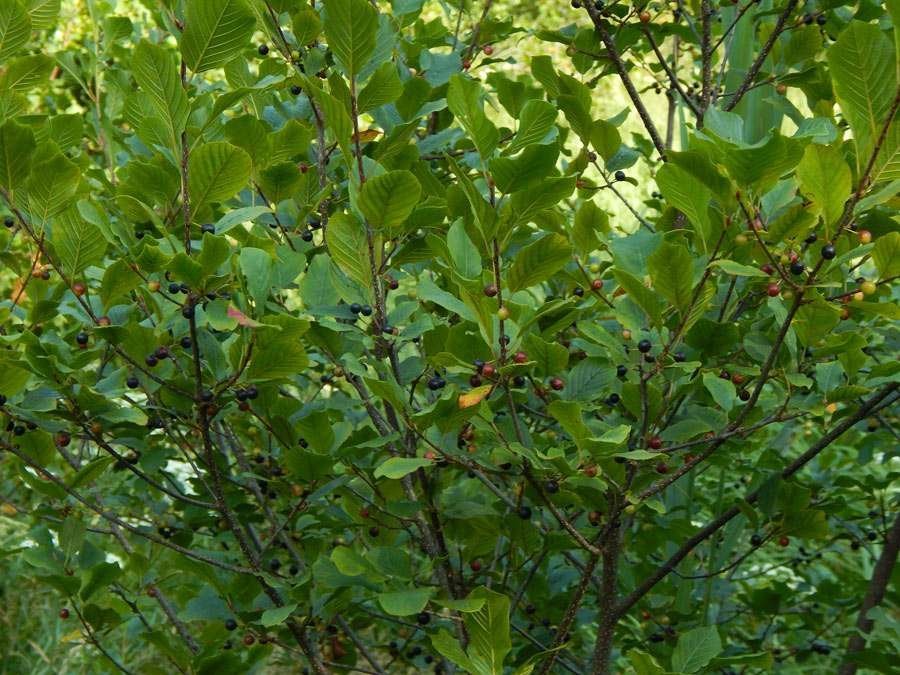
It is a fairly widespread plant, relatively indifferent to soil type, adapting to both moist and rather arid, sometimes stony soils, though always deficient in nitrogen. It grows from the plains up to 1,300 meters above sea level. It can be considered a pioneer species, preparing the way for the emergence of tree vegetation in areas of excessive humidity. Some scholars, however, consider it a competitor, inhibiting the establishment of forest tree species in certain locations through spatial competition.
Finally, let’s remember the tree that killed Rex Fortescue in Agatha Christie’s mystery novel “A Pocket Full of Rye,” poisoned with taxine which is extracted from the Common yew tree (Taxus baccata), a member of the Taxaceae family.
The Common yew is an evergreen, dioecious tree, meaning it has male and female flowers on separate plants. It can reach 25 meters in height and live for 2,000 years or more. Its slow growth allows it to produce very durable, hard, yet flexible wood. In the past, it was used to make bows and arrows, which unfortunately led to the indiscriminate felling of these trees, threatening their disappearance from some areas of Europe.
Consiglio a chi desidera godere della vista di questa splendida specie di cercarla nei boschi ombrosi con suoli calcarei, oltre i 300 metri di quota. La troverà mescolata al faggio, all’agrifoglio e agli aceri.
Its crown, composed of persistent, needle-like leaves, is generally pyramidal and notably spreading, dark green in color with horizontally extended branches and pendulous twigs at the tips. Its especially attractive appearance makes it a popular ornamental plant, so much so that it is found throughout Italy but is uncommon in the wild. The most notable Italian populations are those in the Umbra Forest of Gargano.
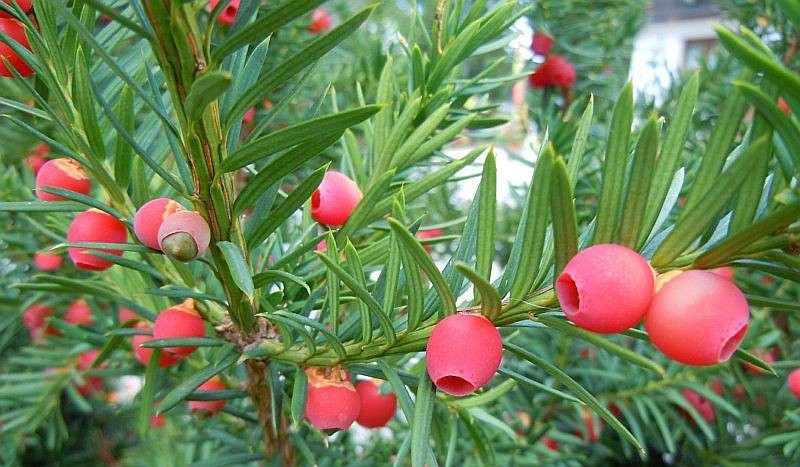
As with other conifers of this order, pollination is carried out by the wind. The male flowers are clustered in globular yellow catkins containing 4-8 pollen sacs. The female flowers are solitary or paired, green, and located at the tip of a twig, each containing a single ovule that develops into a berry-like fruit (arillocarp). This fruit consists of a distinctive fleshy cup (aril), initially green, turning bright red at maturity, which partially covers a large (6-7 mm), black, ovoid, pointed, and woody seed. The aril is the only non-poisonous part of the plant. It is highly prized by birds, which manage to eat it while avoiding the highly poisonous seed, as well as the rest of the plant.
I recommend anyone who wants to enjoy the sight of this splendid species to look for it in shady woods with calcareous soil, above 300 meters above sea level. It will be found mixed with beech, holly, and maples.
Credits
Author: Anna Lacci is a science communicator and expert in environmental education, sustainability, and place-based teaching. She is the author of documentaries, nature books, workbooks, interdisciplinary teaching resources, and multimedia informational materials.
Translated by Maria Antonietta Sessa